How an Emergency Dentist Handles a Partially Knocked-Out Tooth
A partially knocked-out tooth sits in an uncomfortable middle ground. It is not as straightforward as a chipped edge, and it is not quite the same as a tooth that has been completely avulsed, or knocked out of the mouth entirely. In dental terms, this kind of injury often involves displacement. The tooth may be pushed deeper into the socket, pulled partly out, or shifted forward, backward, or sideways. To a patient, it usually looks and feels alarming in a very immediate way. The bite suddenly does not fit. The tooth seems longer or out of line. There may be blood around the gum, tenderness in the jaw, and a sense that something is loose but still attached.
This is exactly the kind of situation an Emergency Dentist is trained to assess quickly. Timing matters, but so does handling. The first few hours can influence whether the tooth heals, whether the nerve survives, and whether the supporting bone and ligaments can recover. The aim is not just to stop pain. It is to preserve the tooth, restore stability, and reduce the risk of long-term complications.
What “partially knocked-out” usually means
Patients describe these injuries in different ways. One person says the tooth is hanging. Another says it feels pushed in. A parent may say their child’s front tooth looks longer than the one next to it. Those descriptions can all point to a traumatic displacement injury.
A tooth that has been partly dislodged but remains in the socket often has damage to the periodontal ligament, the thin set of fibers that help anchor the tooth to the bone. The surrounding tissues may also be bruised or torn. Sometimes the socket wall fractures. In more severe cases, the root can crack or the nerve supply inside the tooth can be compromised.
The visible position of the tooth gives the dentist clues, but appearance alone never tells the whole story. A tooth may look only slightly out of place and still have meaningful injury under the gumline. On the other hand, a dramatic-looking displacement can occasionally be managed very successfully if treatment happens promptly and carefully.
One practical distinction matters early on: whether the injured tooth is a baby tooth or a permanent tooth. The approach can differ significantly. A permanent adult tooth is usually treated with strong efforts to preserve and stabilize it. A baby tooth requires more caution because aggressive repositioning can risk damage to the developing permanent tooth underneath.
The first few minutes after the injury
By the time a patient reaches the office, there is usually a backstory that helps frame the urgency. A fall from a scooter. A collision during basketball. A hit from an elbow in a crowded game. Sometimes the injury is less dramatic, such as biting hard on a steering wheel during a sudden stop or taking a face-first spill on wet tile.
When patients call, an Emergency Dentist or trained dental staff often gives immediate instructions. These are simple but important:
- Avoid pushing, wiggling, or testing the tooth.
- Control bleeding with gentle pressure using clean gauze.
- Apply a cold compress to the outside of the face.
- Eat nothing hard, crunchy, or hot until the tooth is examined.
- Come in as soon as possible, especially if the tooth has visibly shifted.
That advice is not just about comfort. A displaced tooth can be made worse by well-intentioned poking. I have seen cases where family members tried to “straighten” the tooth at home, only to add more trauma to already stretched ligament fibers. A person naturally wants to check whether the tooth is still attached, but repeated pressure can enlarge the injury.
What happens when you arrive at the emergency visit
The first part of the appointment is usually fast, focused, and more systematic than patients expect. The dentist is not only looking at the tooth. They are checking the entire pattern of injury. Trauma to one front tooth can travel through the bite, involve adjacent teeth, or affect the jaw joint and lips as well.
A typical exam includes questions about when the injury happened, how it occurred, whether there was loss of consciousness, whether the tooth has changed color, and whether the bite feels different. If the patient struck their head, feels dizzy, or has signs of concussion, the dentist may advise medical evaluation alongside dental care. Oral trauma does not happen in isolation.
Inside the mouth, the dentist checks the position of the tooth, its mobility, the surrounding gum tissue, and the bite relationship. They will often inspect the lips and cheeks for embedded fragments if a tooth broke during impact. A lacerated lip can hide small enamel pieces, and those fragments sometimes show up on x-rays if there is any doubt.
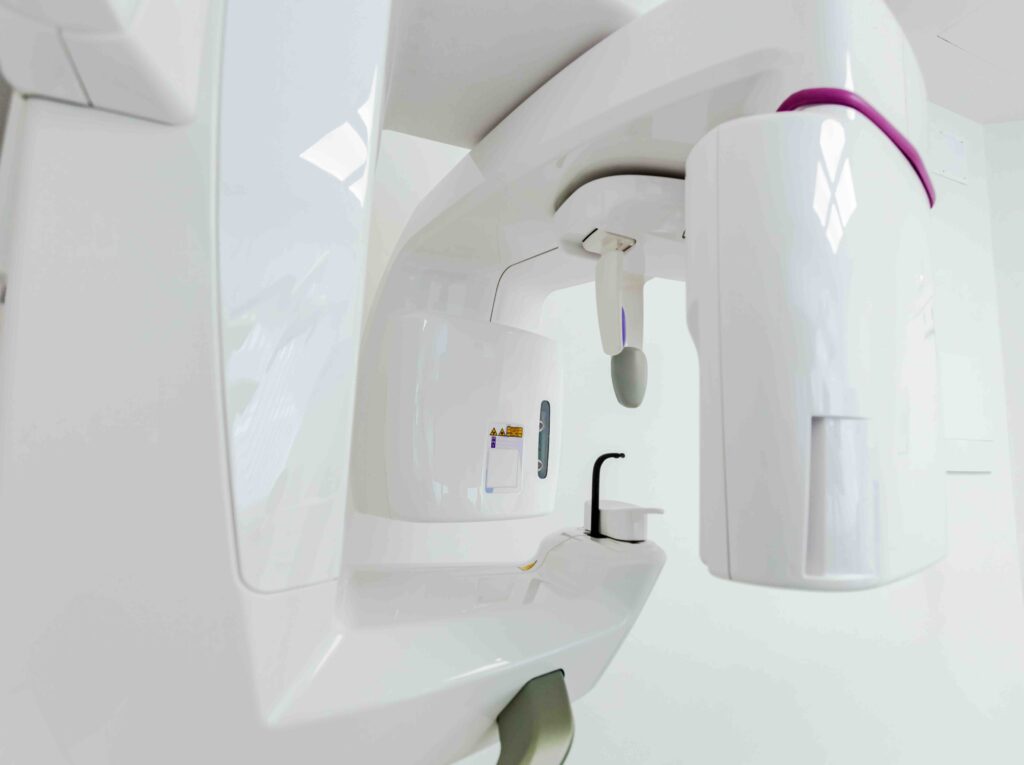
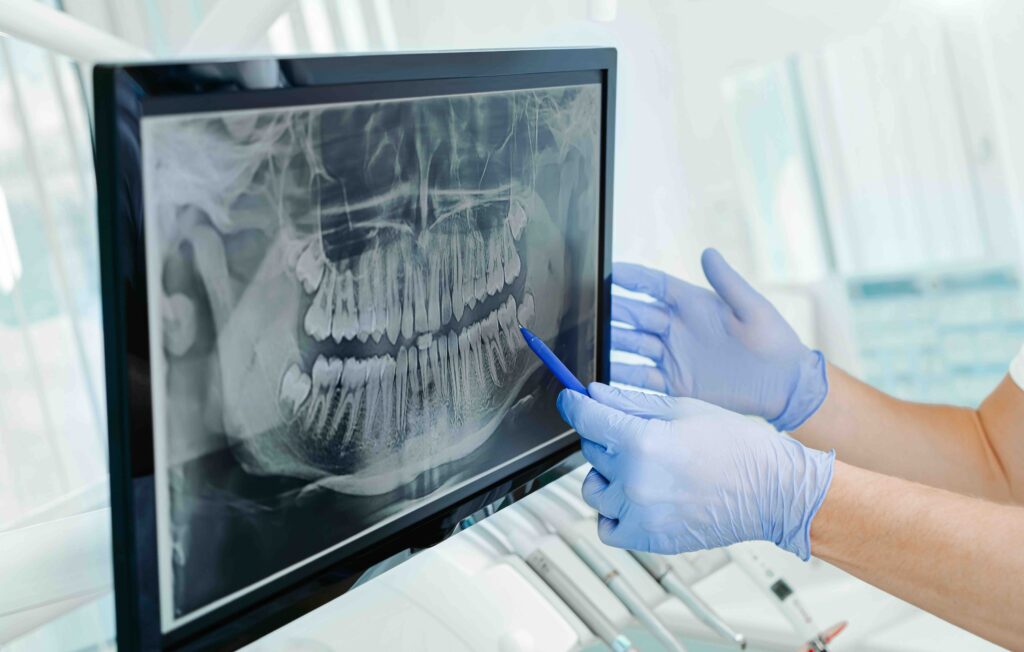
Radiographs are a standard part of the evaluation. A periapical x-ray is common, and in some cases additional angled images or a cone beam scan may be justified. These images help answer practical questions. Is the root intact? Has the socket bone fractured? Has the tooth been pushed into the bone rather than pulled out? Is there evidence of damage in neighboring teeth?
That imaging step matters because different displacement injuries require different handling. A tooth that is extruded, meaning partially pulled out of the socket, is managed differently from a tooth that is laterally luxated, meaning forced to one side, or intruded, meaning pushed deeper into the bone.
The dentist’s immediate priorities
At this stage, an Emergency Dentist is balancing several goals at once. Pain relief is one of them, but not the only one. The larger objective is to give the tooth and surrounding tissues the best chance of healing in a stable position.
The priorities usually unfold in this order: evaluate for deeper injury, clean the area, reposition the tooth if appropriate, stabilize it, and create a follow-up plan. That sounds linear on paper, but in real treatment it takes judgment. Some teeth can be repositioned the same day with relative ease. Others are too unstable, too painful, or too complex because of associated fractures.
Local anesthesia is commonly used before manipulation. Patients are often relieved by that. Many walk in expecting that the tooth will simply be yanked out because it looks so wrong. In reality, preserving the natural tooth is often possible, especially when the root is intact and treatment is timely.
Repositioning the tooth
If the tooth has been partially displaced and is still salvageable, the dentist may gently guide it back into a more natural position. This is not a rough maneuver. It is controlled and deliberate, using light but firm pressure after the tissues are numb. The goal is to seat the tooth properly in the socket while minimizing additional trauma.
An extruded tooth, one that appears longer because it has been partly pulled from the socket, may be eased back into place. A laterally displaced tooth may need to be disengaged from its locked position and shifted back into alignment. A tooth pushed inward, especially in adults, can be more complicated and may require specialist follow-up rather than immediate full repositioning in a general emergency setting.
The bite is checked repeatedly during this step. If the tooth is left slightly high, every closure of the jaws can re-traumatize it. That detail matters more than patients realize. A tiny discrepancy can mean repeated impact hundreds of times a day.
There is no virtue in rushing this. A good emergency dentist is calm here. The best repositioning feels almost uneventful to the patient, which is usually a sign that it was done well.
Stabilizing the tooth with a splint
Once the tooth is in a better position, it often needs support while the ligament and bone heal. This is where splinting comes in. A Emergency Dentist dental splint is typically a small, flexible stabilization device attached to the injured tooth and neighboring teeth with bonding material. It is not the bulky, dramatic appliance some patients imagine. In many cases, it is a thin wire or fiber material that holds the tooth steady but still allows a small amount of healthy physiologic movement.
That slight movement is important. Teeth are not meant to be fused rigidly unless there is a very specific reason. Overly stiff splinting can interfere with proper healing. For many luxation injuries, a flexible splint worn for roughly two weeks is common, though the exact timing depends on the nature of the injury and whether bone fractures are present. More complicated cases can require a longer period.
Patients often assume that once the splint is on, the problem is solved. In truth, the splint is just the beginning of the healing phase. The real question is how the pulp, ligament, and supporting bone behave over time.
Why follow-up matters more than patients expect
A traumatized tooth can look much better after emergency treatment and still develop delayed problems. The nerve inside the tooth may lose vitality days or weeks later. The root surface may begin resorbing, which means the body starts breaking down hard tissue in response to trauma. The ligament can heal normally, or it can heal imperfectly.
That is why an Emergency Dentist will usually schedule a sequence of reviews rather than a single visit. The tooth may be tested for vitality, checked for color change, and re-x-rayed over time. In permanent teeth with mature roots, root canal treatment is sometimes needed after a severe luxation injury, particularly if signs point to pulp necrosis. In younger teeth with incomplete root formation, the dentist may watch more closely in hopes that the pulp can recover.
This is one of the most misunderstood parts of dental trauma care. Patients often think the need for a later root canal means the emergency treatment failed. That is not necessarily true. A tooth can be expertly repositioned and stabilized, yet the nerve may still have been too damaged at the moment of impact to survive long term. Saving the tooth structure and supporting bone is still a worthwhile success.
Cases that look minor but are not
Front teeth get the most attention because people can see them, but posterior teeth can also be partially displaced. These injuries are easier to miss. A patient may complain that one back tooth feels “too tall” when biting. There may be little bleeding and no obvious cosmetic change. Yet the tooth may have been luxated enough to need urgent attention.
Another deceptively serious pattern appears in children and teenagers. Younger patients can be stoic, especially after sports injuries, and may insist they are fine. A slightly tilted incisor may not seem dramatic to a parent in the moment, especially if swelling distracts from the tooth position. Hours later, once the adrenaline fades, the bite feels wrong and the gumline looks uneven. Those are not symptoms to watch for over several days. They justify prompt evaluation.
I remember one adolescent patient who arrived after a baseball collision with what the family thought was only a swollen lip. He had one upper incisor subtly displaced backward, almost hidden by the swelling. He kept saying his teeth “clicked” strangely when he closed his mouth. The x-rays showed no root fracture, which was the best possible finding in that moment. The tooth was repositioned, splinted, and ultimately retained. Had they waited the weekend because it did not seem severe, the outcome might still have been acceptable, but every extra hour with a displaced bite increased discomfort and risk.
When the tooth cannot simply be pushed back
Some injuries are not straightforward reposition-and-splint cases. If the root is fractured, if the socket wall is badly broken, or if the tooth is intruded significantly into the bone, treatment may involve a specialist. Endodontists, oral surgeons, and pediatric dentists often become part of the plan, depending on the age of the patient and the nature of the trauma.
A baby tooth that has been pushed or partially displaced presents another judgment call. Dentists are careful because the permanent tooth bud beneath can be vulnerable. Sometimes the safest path is monitoring or extraction rather than active repositioning. That can be emotionally difficult for parents to hear, especially when the injured tooth is in the front, but preserving the health of the developing permanent tooth takes priority.
There are also occasions when the tooth is so mobile, or the fracture so extensive, that saving it is unrealistic. Even then, the emergency visit is valuable. The dentist can relieve pain, prevent infection, protect the socket, and map out the next step, whether that is a temporary replacement, future implant planning, or another form of restoration.
Pain control, cleaning, and home care
After stabilization, patients want to know two things: how much this will hurt later and what they are allowed to do. The answer depends on the severity of the injury, but most people feel soreness for several days. The discomfort often resembles a deep bruise in the tooth and surrounding bone, with tenderness when biting or touching the area.
Home instructions are usually plain and practical. Patients are advised to keep the area clean with gentle brushing, sometimes to use a chlorhexidine rinse if appropriate, and to follow a soft diet for a period recommended by the dentist. Crunchy bread, nuts, apples, pizza crust, and chewy candy are common mistakes. A healing luxation injury does not need a stress test.
Medications may include over-the-counter anti-inflammatory pain relief if the patient is medically able to take it. Antibiotics are not automatically necessary for every partially knocked-out tooth, but they may be prescribed in selected cases depending on soft tissue wounds, contamination, or associated injuries. Tetanus status may also come up if the trauma involved dirt, pavement, or outdoor impact.
What affects the long-term outcome
Several factors shape prognosis. Time is one, but it is not the only one. The direction and force of the injury matter. So does the age of the patient, the stage of root development, and whether the tooth has a root fracture or socket fracture.
The broad patterns are familiar in practice. Teeth treated promptly tend to fare better than teeth ignored for a day or two. Teeth with incomplete root formation sometimes have a better chance of pulp recovery. Teeth that were displaced but not fractured often do well with careful splinting and monitoring. Teeth that remain out of occlusion, meaning the bite has been left off, are less likely to keep getting re-injured during healing.
Patients also influence outcome by how they behave afterward. The person who “tries it out” with a sandwich that evening is taking a risk. So is the athlete who returns to contact practice before the tooth has stabilized. The emergency appointment starts the repair process, but healing depends on respecting the injury for the next several weeks.
Why speed matters, but panic does not help
Dental trauma creates a particular kind of stress because it is visible, painful, and sudden. People look in the mirror, see a tooth out of place, and imagine the worst. The right response is urgency, not panic. A partially knocked-out tooth needs same-day attention whenever possible, but there is a meaningful difference between acting fast and acting recklessly.
An Emergency Dentist brings order to that moment. They assess what has happened, determine whether the tooth can be repositioned, stabilize it if needed, and watch for complications that may not show up immediately. That is the value of experienced trauma care. It is not just technical skill with a splint or an x-ray. It is the ability to make sound decisions under pressure, to distinguish a tooth that can recover from one headed toward more complex treatment, and to preserve as much natural structure as possible.
For patients, the key takeaway is simple. If a tooth looks longer, shifted, loose, or pushed out of alignment after a blow, do not wait to “see if it settles down.” Teeth do not self-correct well after this kind of displacement. Early treatment can mean the difference between a temporary injury and a permanent loss.
Handled properly, many partially knocked-out teeth can be saved. The process is rarely glamorous. It is careful, methodical, and grounded in small details that matter, from the first phone call to the last follow-up x-ray. That is usually how good emergency dental care works. It solves the urgent problem in front of you while protecting the future of the tooth at the same time.